Work management

Condition monitoring
How Canary approaches sensor anomaly detection by comparing equipment with healthy operation at similar speed, load, and working conditions.
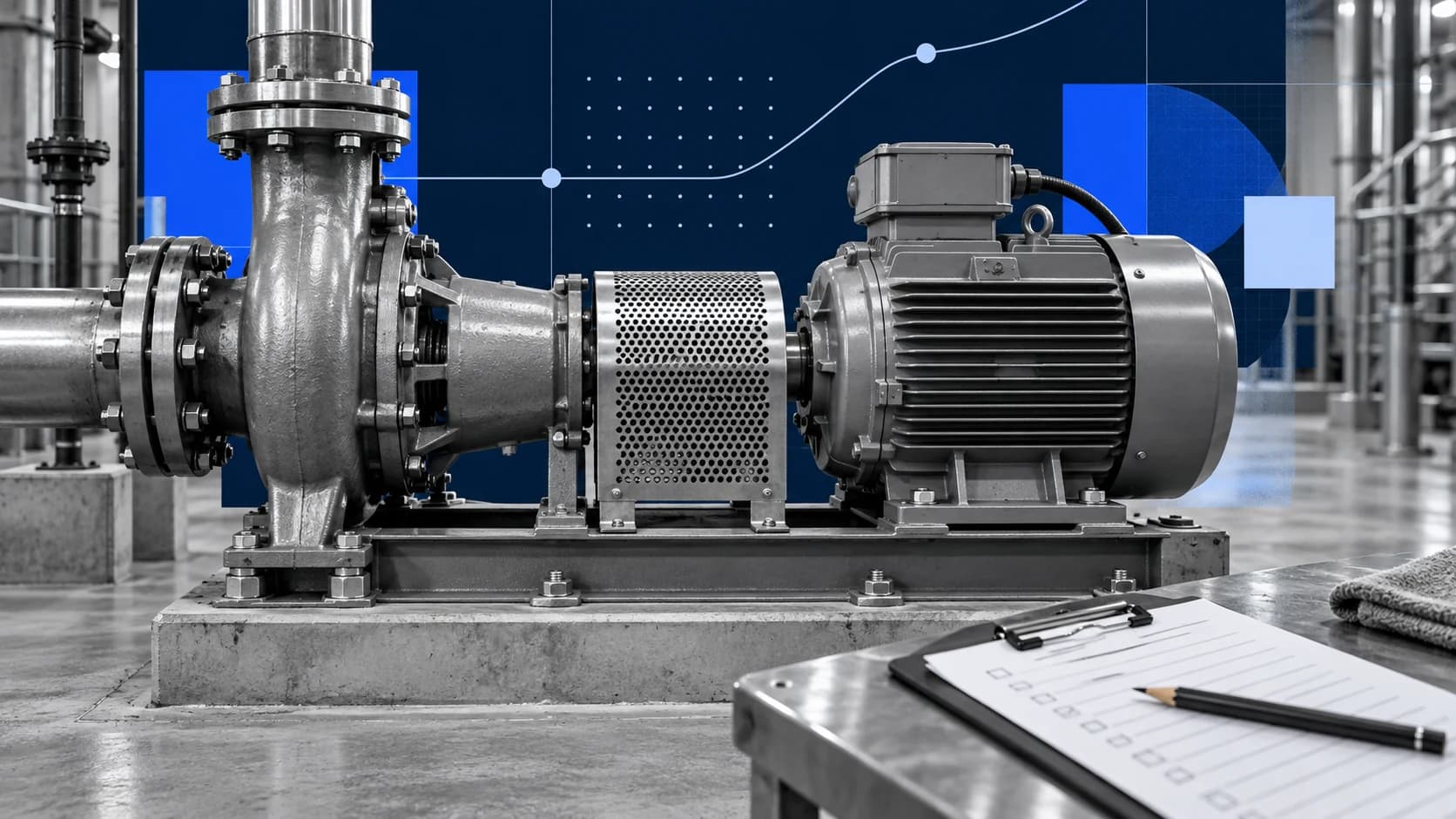
A pump can produce very different vibration at low flow and high flow. A spindle can sound different while idling, accelerating, and cutting. Each condition changes what healthy operation looks like.
For a maintenance team, the useful question is: Is this machine behaving normally for the work it is doing right now?
That question guides the monitoring approach we're developing at Canary. The sequence is simple: understand what the machine is doing, compare it with healthy operation under similar conditions, then flag unusual changes.
An operating state, sometimes called a regime, simply describes what the equipment is doing. That might mean warming up, running without a load, cutting, or pumping at high flow. Its condition tells us whether it is behaving as expected while doing that work.
Keeping those answers separate matters. A healthy machine working hard may vibrate more than it does at idle. A developing fault may change a vibration pattern while its overall level stays below the alarm limit. Using one baseline—a record of healthy behavior—for every situation can make those differences harder to spot.
The comparison needs to match the work the machine is doing.
When available, readings from the machine's controller or motor drive help establish that context: operating mode, speed (RPM), motor current, or load. They tell us what the machine is doing alongside the vibration readings we're checking.
When that information isn't available directly, a model can recognize the mode by comparing sensor patterns with examples labeled “warming up” or “running under load.” It needs representative examples of each mode, and sensors that can tell them apart. Vibration may reveal a change in motion, while another sensor reading helps establish which part of the job is underway.
Our design uses that context to choose the right healthy reference. Running without a load should be compared with healthy operation without a load. Cutting under load should be compared with healthy cutting under similar conditions.
For equipment whose speed or load changes throughout the job, we start with a few meaningful modes. Within each mode, the comparison also needs to account for the speed and load range. This keeps the comparison useful as conditions change, with modes that make sense to the people operating the equipment.
Pretrained machine learning models provide a starting point: they have already learned patterns from sensor data. They help compare patterns in short sections of new readings with healthy examples. Alongside measurements such as vibration level, those patterns help us assess whether the machine's behavior has changed.
Anomaly detection means flagging behavior that differs from the healthy reference. It can be set up using recordings of healthy operation alone. A team can establish a baseline while a machine is working, even if it has never recorded a failure. Past failures remain valuable for testing what the system catches and investigating particular faults.
This is the useful meaning of out-of-the-box anomaly detection: the same core monitoring workflow can be adapted to a machine using healthy examples of the work it does.
Getting the setup right still matters. Readings need consistent units, sampling methods, and sensor placement. Healthy examples must cover the conditions the team plans to monitor. Alarm settings need checking against other healthy recordings that weren't used to build the baseline.
Consider a pump that moves between low-flow and high-flow operation. Here's how the same monitoring approach should handle different situations:
| What the pump is doing | What the sensors show | What it means for the team |
|---|---|---|
| Running at low flow | Readings match healthy low-flow operation | Behaving as expected for this condition |
| Running at high flow | Higher vibration that matches healthy high-flow operation | Behaving as expected for this condition |
| Running steadily at high flow | Readings stay different from healthy high-flow operation | Investigate the change |
| Running at a speed or flow the baseline doesn't cover | Too few similar healthy examples for comparison | Not enough history to assess condition |
That final row is an essential part of the design. A machine can be doing valid work that the baseline doesn't cover yet. The system needs to make that gap clear, so the team knows when there isn't enough information to judge its condition.
Starting up, speeding up, and slowing down also need their own treatment. These can produce different patterns from steady running. The system needs healthy examples of those changes, or a clear indication that its assessment is limited during that phase.
When speed changes during a vibration recording, the analysis needs to follow the rotation. A technique called order tracking follows vibration in step with shaft speed, making patterns easier to compare as the machine speeds up or slows down. It needs reliable speed readings and the right analysis alongside mode recognition.
The healthy baseline needs careful review, too. A new pattern should be checked before it becomes accepted normal behavior. Readings such as machine mode and speed help reduce the chance of a fault being mistaken for a different type of work. Replacing or moving a sensor, or carrying out maintenance, can also mean it's time to review the baseline.
The result should be easy to read beside the vibration plots: what the machine is doing, its speed or load, whether there is enough healthy history to compare against, and whether anything looks unusual. A technician should be able to see both the change and the context behind it.
An anomaly score tells us how unusual the readings are compared with the baseline. Finding the cause—a bearing problem, misalignment, or a process issue—takes further evidence. Vibration plots, more detailed signal analysis, operating history, and inspection findings remain useful parts of that investigation.
Testing needs to check two things separately: whether the system recognizes the work being done, and whether it spots a problem during that work. A useful test compares one shared baseline with baselines matched to each mode, using the same fault across different conditions. It measures missed problems, false alerts per operating hour, and time taken to flag the change. It also checks unfamiliar conditions and compares the model with simpler methods.
For the maintenance team, the aim is a clear handoff. An alert should show which machine needs attention, what it was doing, what changed, and when. The technician can then record what was found, what work was done, and how the equipment behaved afterward.
Want to explore this approach for your equipment? Talk to the Canary team about the machines you run, the sensor data you have, and the changes you want to catch.
Keep exploring
Condition monitoring